Published July 31, 2026 · 8 min read · By Pavel Rataj & Honza Vojtko
Why you keep having the same fight - and why winning it never helps
Every couple has one. The fight that has been rehearsed so many times you could play each other's parts. The topic varies - money, the kids, that tone - but the choreography never does. Here is what we have learned about that fight in twenty years of watching it happen live, in the therapy room.
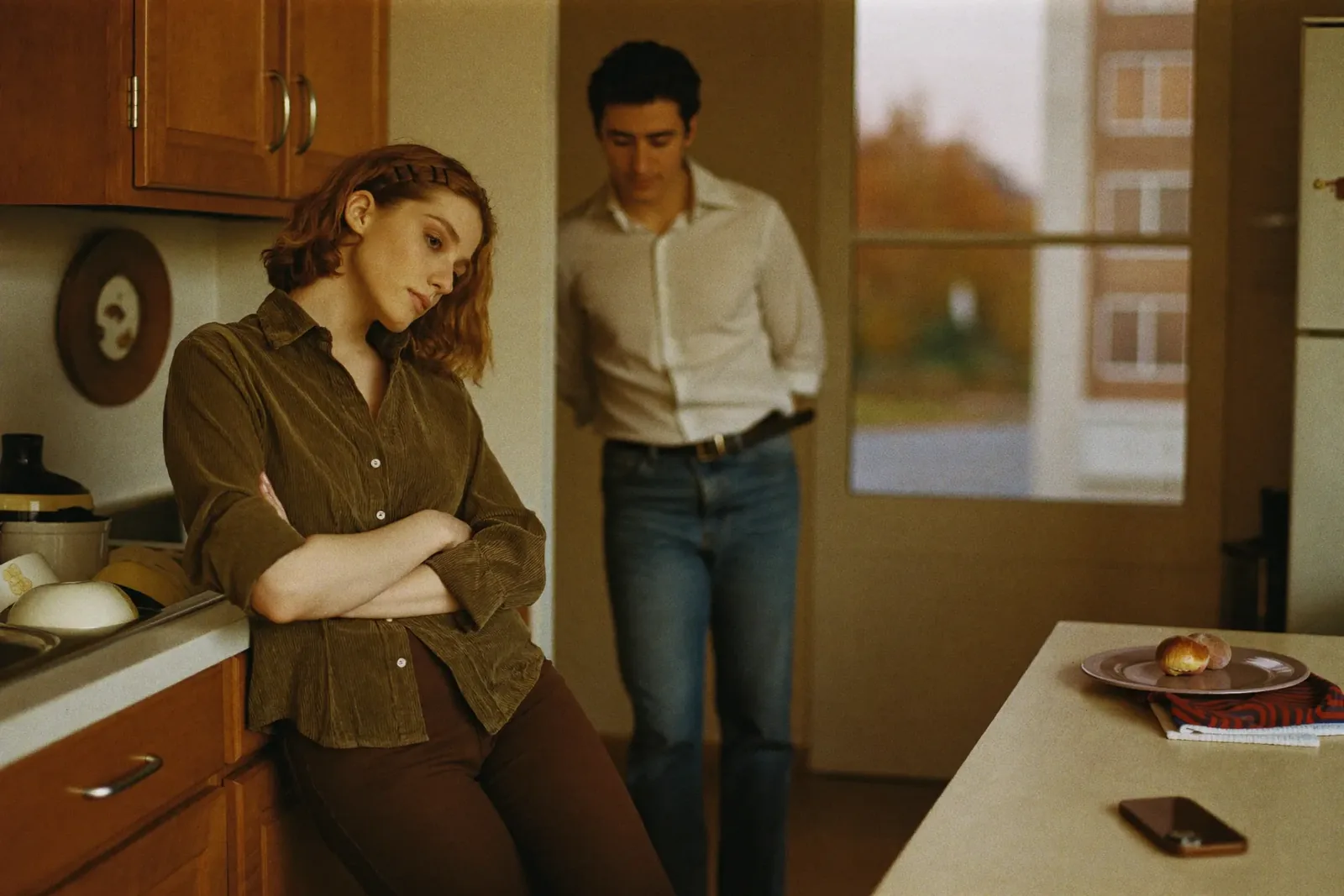
Let us describe a fight you may recognize. One of you raises something - reasonably, at first. The other hears not the words but the edge underneath, and answers to the edge. Within three exchanges you are no longer discussing the dishwasher or the in-laws; you are defending yourselves. Voices rise or doors close, someone says the thing they always say, and it ends the way it always ends: nothing resolved, both of you certain you were the reasonable one. And a week later, the same play, same seats, same script.
If this is you, we want to start with something that may sound strange: the repetition is not a sign of stubbornness, low intelligence, or a bad marriage. Couples who love each other deeply have this fight. Therapists have this fight at home. The repetition is a signal - and it points somewhere most arguing couples never think to look.
The fight is almost never about its topic
Here is the pattern we see over and over: when a fight keeps returning with the same shape, its subject is a stage, not the story. Underneath the dishwasher, the money, the lateness, one or both of you is asking a question that never gets said out loud - usually some version of: Do I matter to you? Can I count on you? Am I allowed to be myself here? These questions are so vulnerable that almost nobody asks them directly. Instead we ask them in code - through complaints, corrections, silences. And the partner, hearing only the code, answers the complaint instead of the question. Which lands as another no to the question. Which sharpens the next complaint.
This is why winning the argument never helps, even when you are right. You can win on the facts and lose on the question - and it is the question that decides how the evening feels. Some couples spend years collecting victories in a fight neither of them understands.
How two reasonable people build an unreasonable loop
The next thing to see is harder, and we would rather you hear it from us than discover it in the middle of an argument: the loop is built by both of you, out of moves that each make perfect sense from the inside. One partner pushes - raises the issue again, more urgently, because being unheard is unbearable. The other withdraws - goes quiet, changes the subject, leaves the room - because the pressure is unbearable. And each response is the perfect fuel for the other. The more one pushes, the more the other retreats; the more one retreats, the harder the other pushes. From inside, each of you is reacting. From outside, the two reactions form a machine that runs on its own - and neither of you is the driver.
The pattern is the opponent. Not your partner.
When couples first truly see this - usually in a session, watching their own last fight replayed slowly - something shifts in the room. Blame gets quieter. Not because anyone was excused, but because the question changed: from who started it to what runs this, and what does it need from each of us to keep running.
What actually interrupts the loop
Not communication techniques - or not first. Techniques applied inside an unmapped loop tend to become new weapons; we have watched couples fight in flawless I-statements. What interrupts the loop is one of you stepping out of your usual move while the fight is warming up. If you are the pusher, this might mean naming the question instead of the complaint: 'I don't actually care about the dishwasher. I felt alone this week.' If you are the withdrawer, it might mean staying one minute longer than you can bear, and saying what the silence protects: 'I'm not ignoring you. When you're this angry, I stop being able to think.'
Neither move guarantees a soft landing - a loop that has run for years does not stop for one honest sentence. But every fight that goes differently, even slightly, is information in the system. The relationship learns something: that the play has more than one possible ending. That is where change actually starts - not in resolving the topic, but in surprising the pattern.
And if you cannot yet manage a different move mid-fight - most people can't at first - start smaller: learn to see the loop while it runs. Just seeing it, naming it silently to yourself as it happens, already puts you partly outside it. A fight you can read is a different fight, the same way a crisis you can read is no longer a dead end.
Questions people ask
- Is having the same argument over and over a sign we're incompatible?
- Usually not. The repeating fight tells you a dynamic has formed, not that you chose the wrong person - couples with deep love and real compatibility build these loops too. Incompatibility is a popular explanation because it makes the pain simple. The loop is a better one, because unlike compatibility, a loop can be mapped and changed.
- Why does my partner shut down every time we argue?
- Withdrawal in a fight is rarely indifference, though it reliably feels that way. More often it is overload: past a certain intensity, some people lose access to the very thinking they would need to respond, and going quiet is how they survive the moment. That doesn't make the silence harmless - it lands as abandonment - but reading it as a defence rather than a verdict changes what you do next.
- Should we just avoid the topics we always fight about?
- Avoidance buys quiet, not peace - the question underneath the fight doesn't leave, it just changes costume, and couples who stop fighting without resolving anything often drift into a silence that is harder to come back from than the arguments were. The goal isn't to avoid the topic; it's to find the real question underneath it and ask that one directly, in a calm moment, without the code.
Keep reading

Signs your marriage is in crisis - and what they actually mean
Most lists of warning signs get one thing wrong: they focus on the loud signals and miss the quiet ones. After twenty…

How to save your marriage when you're the only one trying
It may be the loneliest position in a relationship: you can see the marriage slipping, you are doing everything you…