Published May 31, 2026 · 7 min read · By Pavel Rataj & Honza Vojtko
Feeling lonely in your marriage: what the loneliness is trying to say
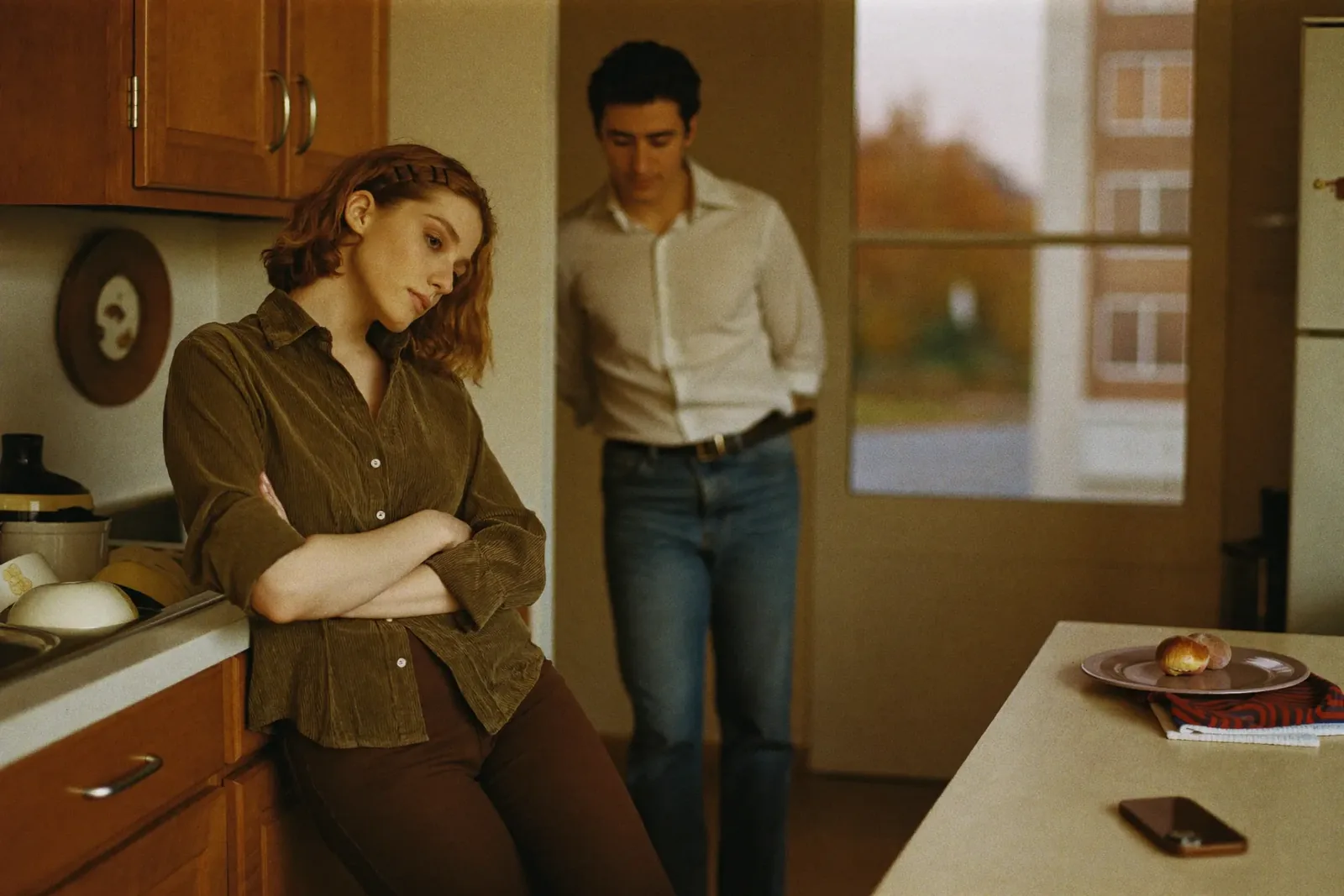
There is a particular loneliness that only exists inside a relationship: lying next to someone you have known for years and feeling further from them than from a stranger. It deserves a better explanation than 'the love has gone.' Usually, something else is going on.

Loneliness inside a marriage is strangely shameful. Being single and lonely makes sense to people; being married and lonely sounds like an accusation - against your partner, or against yourself for feeling it. So most people carry it quietly, sometimes for years, while the marriage looks perfectly functional from the outside. Dinner happens, holidays happen, the family photo is genuine. And underneath runs the question you may not have said aloud yet: how can I be this alone when I'm not alone?
Why you can be lonely next to someone who loves you
Here is the first thing we would want you to know, because it changes the whole picture: loneliness in a marriage is usually not about the absence of love. It is about the absence of contact. Those are different things, and they can come apart. Love is what you feel about someone; contact is what happens - or stops happening - between you. A partner can love you steadily and still be unreachable: buried in work, flattened by exhaustion, hiding from conflict, or protecting themselves from a closeness that has somehow started to hurt. What your loneliness registers, with painful accuracy, is the unreachability. Not the feeling behind it.
This is why the common reassurances miss. 'But he does so much for the family.' 'She would do anything for you.' All true, perhaps - and beside the point. You can be genuinely grateful for everything your partner does and still be starving for the one thing that has gone missing: the experience of being met. Seen, heard, felt - not managed, not coordinated with, met.
How two people drift into living like roommates
Nobody decides to become roommates. It happens by increments, and almost always through a mechanism that begins as something sensible. At some point, reaching for each other started costing too much. Maybe conversations kept tipping into conflict, so you both learned to keep them shallow. Maybe one of you reached and the other, for reasons of their own, could not respond - and after enough of those moments, reaching began to feel humiliating. So both of you, reasonably, redirected yourselves: into the children, work, friends, a screen. Each retreat made the next contact a little harder, the way a cold room makes you less willing to get out from under the blanket.
Notice what this means: the distance was built cooperatively. Not maliciously - protectively. Both of you have been guarding yourselves from the same disappointment, and the guarding itself became the disappointment. In our experience this is the single most common story behind 'married but lonely,' and it carries a piece of genuinely good news. What was built by two people protecting themselves can be unbuilt - not quickly, but really - once at least one of them sees the mechanism instead of a failing partner.
What not to do with the loneliness
Two well-worn paths lead deeper in. The first is to prosecute: to bring your loneliness to your partner as a charge - 'you are never really here' - which forces them to defend themselves, which produces exactly the unreachability you were protesting. The second is to disappear: to conclude that wanting more is childish, adjust your expectations downward, and quietly close the account. This one looks like maturity and costs the most, because a person who has stopped wanting is much harder to reach than a person who is angry.
And a word about the third path, since it so often begins here: the attentive colleague, the old friend who really listens, the online conversation that feels more alive than anything at home. Loneliness inside a marriage makes almost anyone's genuine attention feel like water in a desert. That pull is not evidence of a bad character. It is a measurement of your thirst - worth reading honestly, and worth being honest about with yourself before it makes decisions for you.
Where a way back begins
Not, usually, with a big conversation about the state of the marriage - those tend to arrive carrying so much freight that they confirm the distance instead of crossing it. Smaller and stranger works better: letting your partner see one true thing. Not a complaint about them; a window into you. 'I've been feeling far away from you lately, and I miss you' is a different creature from 'we never talk anymore' - the first is an opening, the second is a verdict. There is no guarantee your partner steps through the opening; they have their own cold room and their own blanket. But in our therapy room, the road back from roommates to partners has almost always started exactly there - with one person taking the risk of being findable again.
The loneliness you feel is not the proof that your marriage is over. It is your capacity for closeness, still alive, still asking. That is worth understanding properly before you decide what it means.
Questions people ask
- Is it normal to feel lonely in a marriage?
- It is far more common than people admit - loneliness inside a relationship is one of the most frequent reasons couples eventually seek help. Common does not mean harmless: it is a real signal that contact between you has thinned. But it usually reflects a protective distance both partners built over time, not the absence of love.
- Should I tell my partner I feel lonely?
- Yes, but the form matters enormously. Bringing it as a charge - 'you are never present' - invites defence and deepens the distance. Bringing it as a window into you - 'I feel far from you and I miss you' - is an opening. The first asks your partner to answer for the marriage; the second invites them back into it.
- Can a roommate marriage become a real relationship again?
- Often, yes - the couples who arrive in our therapy room living like housemates are not usually out of love; they are out of safe ways to reach each other. When at least one partner starts to see the protective mechanism that built the distance, rather than a failing partner, the distance can be unbuilt. Slowly, and not in every case - but it happens far more often than the hopelessness suggests.
Keep reading

Signs your marriage is in crisis - and what they actually mean
Most lists of warning signs get one thing wrong: they focus on the loud signals and miss the quiet ones. After twenty…
Why you keep having the same fight - and why winning it never helps
Every couple has one. The fight that has been rehearsed so many times you could play each other's parts. The topic…